
Setting up an online store requires clear preparation so your online sales run smoothly. When building an e-commerce website Malaysia business owners need to understand what to plan before starting development. This guide breaks down the essential steps to prepare your business for launch. 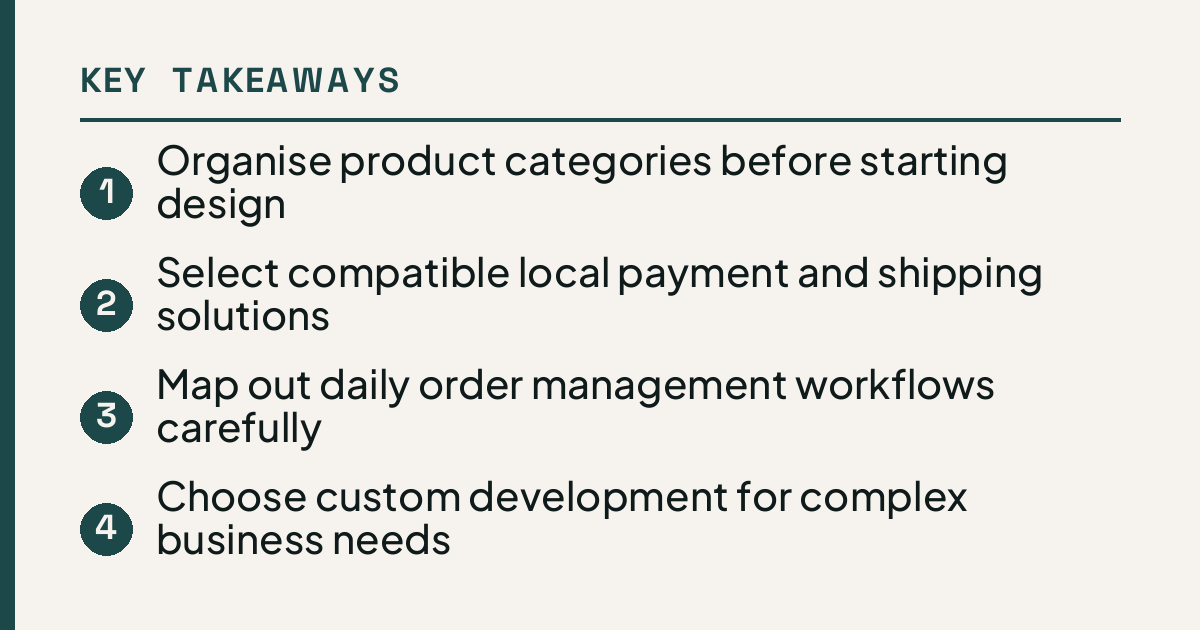
Define Product Catalog and Categories
Before designing your store, organize your products logically. A chaotic catalog confuses shoppers and leads to abandoned carts. Group your items into main categories and subcategories so customers find what they need quickly.
Here is a quick planning checklist for your catalog:
- List all base products and group similar items together.
- Define product variants clearly, such as size, color, or material.
- Keep category names simple and familiar to buyers.
- Limit your main navigation menu to seven categories or fewer.
A common mistake is creating too many top-level categories. If your menu is crowded, mobile users will struggle to navigate. Use filters for specific product details like size or brand rather than adding endless category pages.
If you handle complex product variations or specific business rules, off-the-shelf templates can sometimes feel restricting. At ZheTech, we build custom web applications and e-commerce setups around how your business actually works. Organizing your product structure early saves valuable time during the build phase.
Choose Suitable Payment Gateways and Shipping Solutions
When launching an e-commerce website in Malaysia, seamless payment options and delivery methods directly influence whether a customer completes a purchase. Choosing your partners early keeps your build project moving smoothly.
Selecting the Right Payment Gateway
Malaysian online shoppers expect familiar, fast payment channels. Choose payment gateways that support FPX online banking, major credit cards, and popular e-wallets.
When reviewing options, keep these criteria in mind:
- Supported channels: Ensure the provider covers the exact payment methods your target audience uses daily.
- Cost models: Compare standard transaction percentage fees against setup or recurring account charges.
- System compatibility: Verify that pre-built integration kits exist for your chosen website structure.
Planning Your Shipping Methods
Clear shipping logic prevents confusion at checkout. Decide whether your business needs flat-rate delivery, weight-based calculations, or minimum purchase thresholds for free shipping.
blockquote>Common mistake: Managing courier bookings manually outside your store works fine for five orders a day, but quickly creates mistakes as daily orders grow.
blockquote>For higher order volumes, automated shipping integration connects your store directly with local courier services to generate tracking numbers instantly. At ZheTech, we help growing companies link their online store backend directly with payment gateways and logistics providers to eliminate tedious manual work.
Decide Between Website Builders and Custom Systems
When launching an online store, a major decision in your e-commerce website Malaysia what to plan list is choosing the platform model. Businesses generally choose between ready-made website builders and custom web systems, depending on operational complexity.
Standard website builders rely on pre-made templates and hosted app ecosystems. They suit retail businesses with straightforward selling models and standard product catalogs. However, recurring subscription fees can add up over time, and modifying underlying code or custom user flows is often restricted.
Custom web systems are built around your exact business processes. If your operations require specialized order approval steps, dynamic wholesale pricing tiers, or direct synchronization with internal business software, custom web development offers full flexibility and database ownership.
What to Consider Before Choosing
- Catalog complexity: Do you sell standard items or customized products with complex options?
- System integration: Does your store need to connect directly with custom backend software or inventory dashboards?
- Platform ownership: Do you require complete control over source code and feature updates?
A common mistake is selecting a platform based only on quick setup speed rather than long-term technical needs. Businesses often outgrow rigid templates once order handling requires automation. A modern agency like ZheTech can review your workflow requirements to help you choose the right balance between standard convenience and custom functionality.
Plan Inventory and Order Workflows
Many business owners focus heavily on website design but forget how orders move behind the scenes. Managing sales through spreadsheets and messaging apps quickly leads to stock errors and delayed shipping as your order volume grows. Mapping your operational workflow early keeps your business running smoothly.
Essential Order Management Steps
- Stock level updates: Decide whether stock decreases instantly upon checkout or after payment confirmation.
- Order status flow: Define clear stages for your team, such as Order Received, Packing, Shipped, and Completed.
- Automated notifications: Plan standard status update emails so customers track their packages without calling support.
- Returns and cancellations: Set clear rules for how restocks and refunds reflect in your inventory system.
If your business relies on unique handling steps, standard templates can feel restrictive. Working with a partner like ZheTech allows you to build custom order tracking dashboards aligned with your real daily routines.
Reviewing these backend operations is an important step when working through your e-commerce website Malaysia what to plan checklist. A well-planned workflow turns online orders into reliable daily deliveries without extra operational stress.
Prepare Business Content and Branding Assets
Building an online shop involves more than setting up technical features. Your content directly influences customer trust and buying decisions. Gathering these assets early ensures a smooth development process when learning e-commerce website Malaysia what to plan before your official launch.
High-Quality Product Visuals
Prepare clear, high-resolution product photos taken from multiple angles. Avoid downloading images sent through chat apps, as compression lowers image quality. You should also organize your brand assets, including transparent PNG or vector logo files and brand color codes.
Structured Product Information
Write original product titles, detailed descriptions, and accurate measurements. Provide clear answers to common customer questions regarding materials, sizes, or instructions. Avoid copying manufacturer text line-for-line to help your store stand out.
Essential Legal and Store Policies
Local payment gateways and shipping providers often require specific operational pages before approving your business account. Prepare plain-language drafts for the following:
- Return and Refund Policy: Outline exact timeframes and conditions for returns or replacements.
- Privacy Policy: Explain how personal data and contact details are collected and stored securely.
- Terms of Service: Define order fulfillment rules, liability limits, and user responsibilities.
- Company Profile: Share your business story, registered business number, and official contact details.
Organizing these files in advance allows a development partner like ZheTech to build your pages efficiently without constant back-and-forth delays.
Select the Right Web Development Partner
Building an online store requires reliable support, not just a one-off design. The partner you choose affects how smoothly your business runs after your site goes live.
When reviewing potential developers, look beyond the initial visual layout:
- Long-term maintenance: Ensure they offer ongoing website maintenance and bug fixes so your store stays secure.
- Workflow customization: Verify if they can handle custom systems, like order tracking or custom dashboards, as your needs grow.
- Full asset ownership: Confirm that you retain complete ownership of your site data, domain name, and store content.
- Clear communication: Work with a developer who explains technical choices clearly without technical jargon.
A common mistake is choosing a developer based only on speed or lowest initial effort. If your developer disappears after launch, resolving simple checkout bugs or updating product options becomes stressful and slow.
Now that you understand what to plan before building an e-commerce website in Malaysia, gather your catalog details, map your fulfillment steps, and decide on your payment setup.
If you prefer a reliable partner to help turn your plan into reality, agencies like ZheTech offer custom e-commerce web design and ongoing website support built around how your business actually operates. Planning thoroughly today prevents costly rebuilds later.
Frequently asked questions
Should I use a standard website builder or get a custom e-commerce system?
It depends on how complex your business operations are. Standard builders work well for straightforward product listings, while custom systems suit businesses with unique order workflows or internal reporting needs. An agency like ZheTech can review how your business actually works to recommend the right setup.
What payment options should I prepare for online customers in Malaysia?
Malaysian shoppers expect local payment choices including FPX online banking, credit cards, and popular e-wallets. Choosing local payment gateways ensures smooth transactions and builds buyer trust. You should apply for gateway merchant accounts early as approval takes some time.
How can I prevent manual errors when tracking e-commerce orders?
Relying on chat messages and manual spreadsheets makes order tracking slow and error-prone as sales grow. A properly structured website or custom admin system automates payment checking, stock updates, and status tracking. This reduces routine admin work so your team can focus on fulfillment.
What content do I need to gather before starting website development?
You need clear product images, detailed descriptions, organized categories, and your brand logos. Preparing your shipping policies and company profile in advance prevents unnecessary delays during the building process. Teams like ZheTech can guide you on how to organize these assets for high clarity.
📞 Contact us for a free quote today! 018 - 397 9688
👉 Book a 30 minute free consultation 👇
WhatsApp us:
🔗 https://wa.link/1od7c2
🔗 https://wa.link/1od7c2
🔗 https://wa.link/1od7c2
Visit us at:
🔗 https://zhetech.my